Picture this: it’s a sunny Saturday afternoon, and after a week of hectic schedules, your lawn looks fantastic. But then, you head to your car only to discover a dead battery. What if I told you that your lawn mower could be the unexpected hero in this situation? Yes, some lawn mowers are equipped to jump-start a car, which can save you time and frustration in a pinch. In this article, we’ll explore how this unusual combination works, the potential risks involved, and essential tips for making it happen safely. So, before you reach for those jumper cables, let’s delve into whether your lawn care equipment could also come to the rescue for your vehicle’s battery woes. Curious? Let’s find out!
Understanding Jump Starting a Car Safely
When dealing with a dead car battery, understanding the process of jump starting safely is crucial to prevent accidents or damage. Jump starting a vehicle involves connecting a non-functioning battery to a functional one, allowing the latter to provide enough voltage to start the engine. However, it’s essential to follow proper procedures to mitigate risks associated with battery sparks and reverse polarity, which can lead to severe damage or personal injury.
First and foremost, always ensure you have the right safety equipment on hand, including gloves and goggles, to protect yourself from potential explosions or acid leakage. It’s also wise to double-check your jumper cables for frayed or damaged insulation, as unsafe cables can compromise your safety. Furthermore, it’s important to identify the correct terminals on both batteries-positive (typically red) and negative (typically black)-to prevent incorrect connections. Always connect the positive terminal first before attaching the negative terminal to a grounded metal surface to avoid sparks occurring near the battery.
For those considering unconventional energy sources, such as using a lawn mower to jump start a vehicle, specific precautions must be taken. While some lawn mowers may indeed possess sufficient voltage, they generally lack the amperage required for a successful jump. Therefore, knowing the specifications of both the lawn mower and the car battery is vital. If you’re considering this method, make sure to assess whether your mower meets the necessary power output.
Remember, even the most seasoned drivers can make mistakes under pressure, so familiarize yourself with common pitfalls. For instance, connecting the cables in the wrong order, allowing the clamps to touch each other, or attempting to jump a battery that is visibly damaged can lead to accidents. By understanding these safety guidelines and following them meticulously, you’ll be well-prepared to jump start a car safely, whether you’re using traditional jumper cables or contemplating the unique approach of utilizing a lawn mower.
How a Lawn Mower Generates Power

The mechanics behind are fascinating and essential for understanding its potential use in unconventional tasks, like jump starting a car. At the heart of a lawn mower’s operation is its engine, typically a small internal combustion engine or, in some modern cases, an electric motor. These engines work by converting fuel or electrical energy into mechanical power that drives the mower’s blades, allowing it to cut grass efficiently.
In a gas-powered lawn mower, fuel is mixed with air and drawn into the cylinder, where it is compressed and ignited by a spark plug. This ignition pushes the piston down, generating mechanical energy that ultimately translates into the rotation of the mower blades. Meanwhile, electric mowers utilize an electric motor powered by a rechargeable battery or a direct plug-in to the electrical grid, converting electrical energy into kinetic energy with impressive efficiency. Despite their differences, both types have a significant limitation when it comes to their electrical output capabilities, which is crucial when considering them as a potential jump starting source for a vehicle.
Power Output Considerations
Before thinking about using a lawn mower to jump start a car, it’s important to consider the power output specifications of both devices. Here’s how they typically compare:
| Device | Voltage Output | Amperage Output |
|---|---|---|
| Standard Lawn Mower | 12V (for battery models) | Low (typically under 10A) |
| Car Battery | 12V | High (often 400A or more) |
While both devices operate on 12 volts, the crucial difference lies in their amperage capabilities. Most lawn mowers can deliver sufficient voltage but often lack the necessary amperage output to effectively start a car, which requires a robust surge of power to crank the engine. Therefore, assessing your lawn mower’s specifications is essential before attempting a jump start, as even minor variations in power capability can determine whether the effort succeeds or fails.
By understanding these principles, you can better gauge the feasibility of using your lawn mower for jump starting a car and avoid common pitfalls associated with improper use of electrical devices.
Comparing Lawn Mowers and Car Batteries
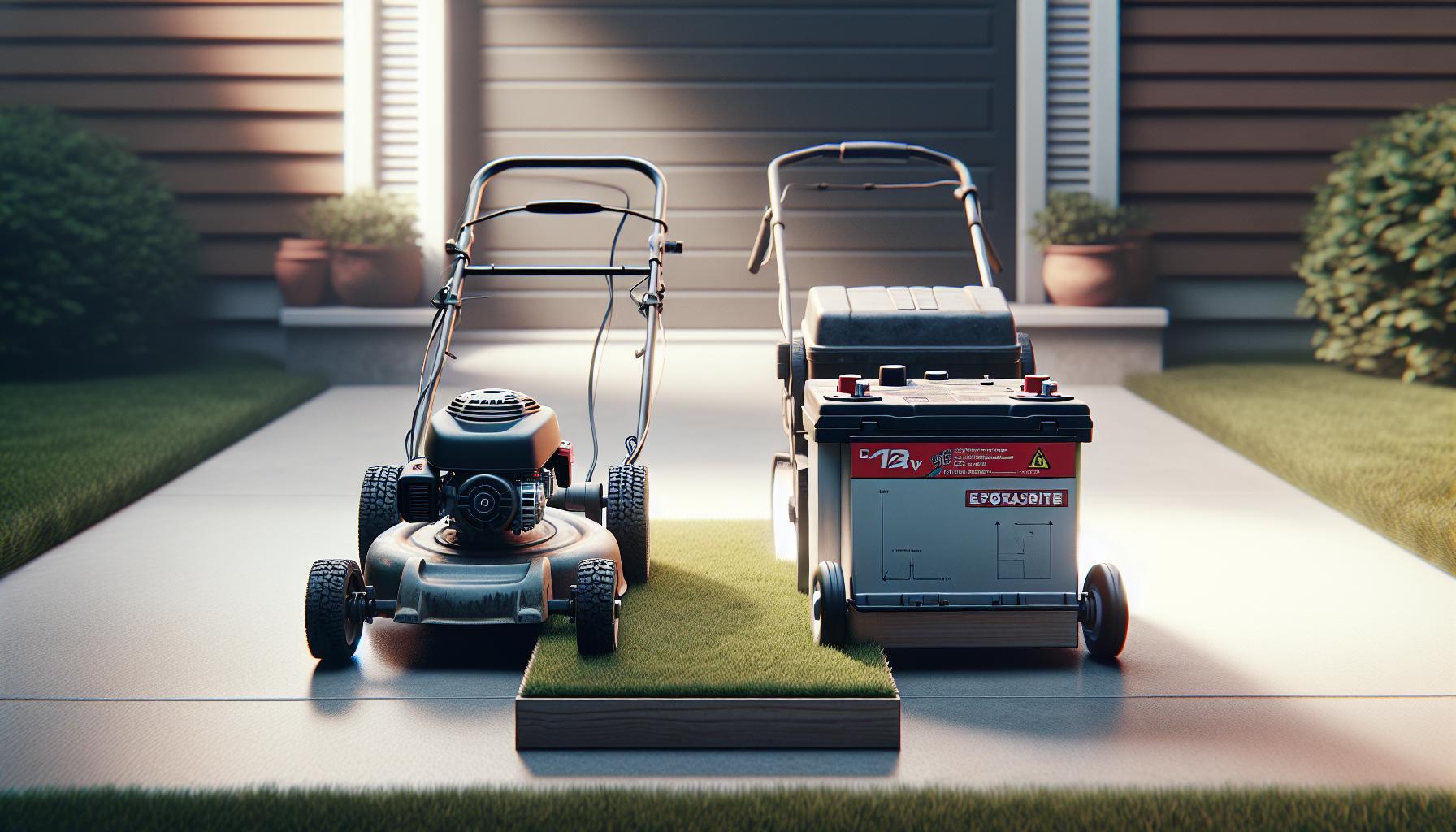
In the world of small engines, there exists a significant disparity between the power capabilities of lawn mowers and car batteries. Understanding this difference is vital, especially for anyone considering the unconventional approach of using a lawn mower to jump start a vehicle. While both devices typically operate on a standard 12 volts, the amperage output-crucial for starting an engine-differs vastly.
Car batteries are engineered to deliver a high amperage, often reaching 400 amps or more in surge situations. This immense surge is necessary to turn over the engine, as it requires an initial power boost to get started. In contrast, most lawn mowers, particularly those with electric or battery components, provide a significantly lower amperage output, usually under 10 amps. This lack of substantial power means that while a lawn mower can potentially provide the necessary voltage, it often cannot supply enough current to effectively initiate the car’s ignition process.
Moreover, the design intentions behind these devices play a critical role in their performance. Car batteries are specifically engineered for high-demand tasks, while lawn mowers are optimized for powering blades to cut grass efficiently. This fundamental difference highlights why relying on a lawn mower for a jump start may not yield the expected results. For instance, someone might attempt a jump start and see the mower’s battery provide enough voltage, only to find that it can’t sustain the burst of energy needed, leading to frustration and potentially damaging the mower.
When contemplating power sources for a jump start, it’s essential to assess not just the voltage but the amperage that each tool can provide. Always remember that when it comes to powering a vehicle’s engine, the ability to deliver a robust, sustained current is what truly matters. Thus, while the notion of using a lawn mower in this manner can be intriguing, the practical realities make it clear that conventional jump starting methods with appropriate power sources are usually the most reliable choice.
The Right Tools for a Successful Jump Start
While the idea of using a lawn mower to jump start a car might seem audacious, having the right tools ready can significantly enhance your chances of success. To achieve an effective jump start, it’s crucial to ensure that your equipment is compatible and functioning properly. Here are the essentials you need to consider.
First and foremost, you’ll need a quality set of jumper cables. Heavy-duty cables are recommended, generally rated for heavy currents, to ensure they can handle the load during the jump start. Look for cables with thick copper wire, as they are more efficient at transferring power. Additionally, the clamps should be robust and ideally feature a spring mechanism for a secure grip on both the mower and car battery terminals.
Essential Tools and Equipment
- Jumper Cables: At least 4 to 6 gauge is preferable for optimal power transfer.
- Safety Gear: Gloves and goggles to protect against potential sparks or battery acid.
- Multi-tool: Useful for any adjustments or unforeseen issues that may arise during the process.
- Flashlight: Especially important if you’re attempting a jump start in low-light conditions.
Additionally, understanding the condition of both the lawn mower and the car battery is vital. Ensure that the mower’s battery is sufficiently charged and in good health. Regular maintenance, such as cleaning corroded terminals and topping off fluid levels, can make a significant difference. Similarly, check the car’s battery; if it’s completely dead, it might not respond even with a voltage supply from the mower due to the aforementioned amperage limitations.
Keeping these tools handy, along with a thorough understanding of how to connect and disconnect the cables safely, will prepare you for a successful jump start attempt. In some instances, having a second person can be beneficial-one to operate the mower and the other to monitor the car’s response, ensuring safe and efficient handling throughout the process.
Step-by-Step: Using a Lawn Mower to Jump Start
Using a lawn mower to jump start a car can sound unconventional, yet in emergencies, it can be an effective solution. To ensure a successful jump start, it’s essential to follow a clear and systematic approach to safely connect both machines.
Firstly, park the lawn mower and car parked close enough for the jumper cables to reach both batteries. Ensure both machines are off, and remember to engage the parking brake on the car for safety. Begin by identifying the terminals on both the mower and car batteries-typically, the positive (+) terminal is red, and the negative (-) terminal is black.
Start by connecting the jumper cables in the following order:
- Step 1: Attach one end of the red jumper cable to the positive terminal of the mower’s battery.
- Step 2: Connect the other end of that red jumper cable to the positive terminal of the car’s battery.
- Step 3: Attach one end of the black jumper cable to the negative terminal of the mower’s battery.
- Step 4: Connect the other end of the black cable to a grounded metal surface on the car, such as a bolt or the frame, away from the battery to reduce the risk of sparks near the battery.
Once everything is securely connected, start the lawn mower and allow it to run for a few minutes to charge the car’s battery. Then, attempt to start the car. If it starts successfully, allow the engine to run for a while to fully charge the car battery. When removing the cables, reverse the connection order to ensure safety: disconnect the negative cable from the car first, then the mower, followed by the positive cables in the same manner.
This process emphasizes the importance of safety and proper technique, ensuring that you can rely on your lawn mower in a pinch. Familiarizing yourself with these steps before an actual need arises can save valuable time and reduce stress in a situation requiring an urgent jump start.
Common Mistakes to Avoid During Jump Starting
Connecting a lawn mower to a car battery might seem straightforward, but rushing through the process can lead to substantial errors. Understanding the most frequent mistakes during jump-starting can ensure safety and efficiency. For instance, one common error is failing to check terminal polarity before making connections. Always confirm that you connect the positive cable to the positive terminal and the negative cable to the negative terminal. Mixing these up can not only prevent the car from starting but could also lead to serious damage to both batteries.
Another mistake many people make is not securing the connections properly. Loose cables can result in inefficient power transfer or arcing, which produces heat and can become dangerous. Ensure cables are tightly clamped to the terminals, and if they start to feel warm, it’s best to disconnect and recheck the connections.
Many jump-starting attempts fail because individuals overlook the necessity of fully charging the lawn mower before relying on it as a power source. If the mower’s battery is weak or depleted, it may not provide enough power to recharge the car’s battery adequately. It’s recommended to periodically check the mower’s battery health, especially if you plan to use it for jump-starting.
Lastly, removing the cables is just as crucial as putting them on. A common blunder is disconnecting the cables in the wrong order. Always remove the negative cable from the car first, then the mower, followed by the positive cables. Incorrect removal can cause a spark and potentially cause an explosion, particularly if gas vapors are present around the car battery. Keeping these considerations in mind can enhance safety and improve your chances of a successful jump start using your lawn mower.
Benefits of Emergency Lawn Mower Power
In emergency situations, having an alternative power source can be a game-changer, particularly in the case of a lawn mower, which most homeowners already own. While the idea of using a lawn mower to jump-start a car may seem unconventional, it presents numerous advantages when traditional jump-start methods are unavailable. For instance, if you find yourself stranded with a dead car battery in your driveway or garage and no friends or roadside assistance are nearby, your trusty lawn mower could come to the rescue with its own battery power.
One of the primary benefits of using a lawn mower as an emergency power source is its accessibility. Most people have a lawn mower readily available, especially during the mowing season. Not only is it convenient, but utilizing a lawn mower for this purpose can also alleviate the stress associated with unexpected car trouble. By knowing how to safely jump-start your vehicle with your lawn mower, you gain a practical skill that enhances your self-reliance in a pinch.
Moreover, lawn mowers typically feature batteries that can provide sufficient voltage for a car’s needs. Unlike smaller batteries found in various appliances, a lawn mower’s battery is designed to start a more substantial engine, making it capable of delivering the necessary power for jump-starting. This adaptability means that in lieu of waiting for roadside assistance, you can take matters into your own hands with relative ease, potentially saving you both time and money.
- Cost-Effective: By relying on your lawn mower instead of calling for a tow or roadside service, you can significantly reduce unexpected expenses.
- Time-Saving: Instead of waiting for help, handling the situation yourself allows you to get back on the road promptly.
- Multi-Functional: Your lawn mower serves multiple purposes, acting as both a gardening tool and an emergency power source, which maximizes its utility.
In summary, knowing how to harness the power of your lawn mower in emergencies not only empowers you as a vehicle owner but also underscores the importance of being prepared for unforeseen challenges. With this knowledge, you can face car trouble confidently, ensuring that you are equipped to manage unexpected events effectively.
Exploring Alternatives: Other Jump Start Methods
In emergency situations, knowing various jump-start methods can be crucial, especially when convenience is key. While using a lawn mower can be an innovative solution, there are other reliable alternatives that can get your car back on the road quickly. One popular option is using a set of jump starter cables to connect your car to another vehicle with a working battery. This traditional method is straightforward and commonly understood, as most drivers have access to someone who can assist in jumping their car.
Portable Jump Starters have become increasingly popular due to their ease of use and compact design. These battery packs can jump-start a car without needing another vehicle, making them ideal for solo drivers or those who frequently find themselves in unexpected situations. Simply charge the jump starter at home, keep it in your trunk, and you’ll be prepared should your battery die. Instructions for use are generally simple, allowing even those with minimal mechanical knowledge to manage the process effectively.
Another alternative involves using solar-powered chargers. These environmentally friendly devices can trickle charge your car battery over time, making them a fantastic option for those who park their vehicles in direct sunlight. Although they may not provide an instant jump, they serve as a reliable long-term solution, ensuring that your battery maintains a charge even when the car isn’t in use.
- Jump Starter Cables: Connect to a working vehicle for quick jump-starting.
- Portable Jump Starters: Compact battery packs that allow for independent use.
- Solar-powered Chargers: Sustainable option for maintaining battery charge over time.
Choosing the Right Method
Deciding on the best jump-start method depends on your specific circumstances and preferences. For instance, if you’re often in remote areas without access to another vehicle, investing in a portable jump starter may be wise. Conversely, if you have friends or family nearby who can assist, traditional jump cables offer a reliable approach. No matter which method you choose, being prepared with knowledge and the right tools can significantly reduce the stress of dealing with a dead battery.
When Not to Use a Lawn Mower for Cars
Using a lawn mower to jump-start a car might sound like a creative solution to an inconvenient problem, but there are crucial factors to consider before attempting it. Firstly, lawn mowers and cars differ significantly in terms of battery voltage and capacity. Most lawn mowers operate on a 12-volt system, similar to vehicles, but the amperage required to jump-start a car engine is substantially higher than what a mower can provide. Attempting to use a lawn mower in this manner could not only be ineffective but may also risk damaging both the mower and the car’s electrical system.
Another important aspect is the physical setup of the lawn mower. Typically designed for mobility across flat, grassy terrains, lawn mowers lack the necessary safety or stability features required for safely jumping a vehicle. Their batteries may also be located in hard-to-reach places, making connection to a car battery challenging and potentially hazardous. If the mower battery is weak or not adequately charged, it will not supply enough power to start the car, leading to frustration and possible delays in getting back on the road.
Additionally, it’s vital to remember that safety should always come first. Jump-starting any vehicle involves risks, including the possibility of sparks, electrical shorts, or even explosions if the batteries are mishandled. Most people lack the necessary knowledge or experience to troubleshoot potential issues effectively, especially in an unconventional situation like jumping a car with a mower. Therefore, it is wise to assess whether more traditional and reliable methods of jump-starting, such as using cables with another vehicle or a portable jump starter, might be the far better options.
In conclusion, while the idea of using a lawn mower to jump-start a car may emerge from necessity or resourcefulness, it is essential to consider the limitations and risks involved. For the sake of efficiency, safety, and reliability, sticking to conventional jump-start methods is advisable.
Maintaining Your Lawn Mower for Jump Starting
Maintaining your lawn mower is essential not just for optimal grass cutting but also for keeping it ready for a potential emergency, like jump-starting a car. Regular upkeep of your mower can ensure that its battery remains in good condition and can provide adequate power if you find yourself in a pinch.
To keep your mower’s battery in top shape, consider the following maintenance steps:
- Regular Charging: If your mower isn’t used frequently, it’s important to periodically charge the battery. A fully charged battery will have a better chance of supplying power when needed.
- Battery Inspection: Check the battery terminals for corrosion. Clean any buildup with a mixture of baking soda and water, ensuring a good connection is maintained.
- Fluid Levels: Ensure that all fluids-like oil and fuel-are at appropriate levels to keep the mower running efficiently.
- Fuel Quality: Use fresh fuel to avoid any issues with starting up. Stale fuel can lead to problems, particularly if you attempt to start the mower under stress, such as in a jump-start scenario.
- Safety Checks: Before attempting to use the mower for jump-starting a vehicle, ensure all safety features are functional. This includes making sure the mower can start and run without issues.
In addition to these steps, consider the overall condition and age of your mower. Older models may require more frequent battery replacement or maintenance checks. When the battery starts to show signs of wear, consider replacing it with a high-quality option to ensure reliable performance.
Remember that while keeping your mower ready for emergency use is beneficial, traditional methods for jump-starting a car may often be safer and more reliable. Make sure to evaluate whether the mower is truly the best option in any given situation. By maintaining your mower diligently, you enhance its chances of being a helpful tool in unexpected situations, while also ensuring it performs well throughout the mowing season.
Real-Life Experiences: Success Stories and Failures
In a world where battery technologies are constantly evolving, the idea of using a lawn mower to jump-start a car may seem unconventional, yet it has proven to be a successful backup plan for some. Take the case of a family who found themselves stranded during a road trip when their car battery died in the middle of a remote area. With no cell signal and a long wait for a tow truck, they resorted to their trusty riding mower parked in the backyard of their rental. By carefully following safety procedures and leveraging the mower’s battery, they managed to breathe life back into their car, allowing them to continue their journey.
On the flip side, there are also cautionary tales from those who underestimated the challenges involved. One individual shared their experience of attempting to jump their SUV with a push mower. Unfortunately, the mower’s battery was not sufficiently charged, leading to frustration and even greater delays. This incident highlights the importance of maintaining not just the lawn mower, but also the awareness that not all mowers will have the requisite power for larger vehicles. The key takeaway from these experiences is the necessity of preparation.
To improve the odds of success when contemplating this method of jump-starting, it’s prudent to keep a few practical tips in mind:
- Know Your Equipment: Understand the power output of your lawn mower and whether it can adequately support your car’s battery.
- Frequent Maintenance: Regularly check the battery condition of both the car and mower to ensure optimal performance during emergencies.
- Be Mindful of Safety: Always adhere to safety protocols to avoid potential injuries or further damage.
Harnessing lawn mowers for such unexpected situations not only demonstrates resourcefulness but also reinforces the importance of maintaining all battery-operated tools. Whether it’s a success story or a cautionary tale, the experiences shared by these individuals serve to remind us that sometimes, unconventional solutions can lead to surprisingly effective outcomes.
Frequently Asked Questions
Q: Can a lawn mower really jump-start a car?
A: Yes, a lawn mower can jump-start a car under certain conditions. It must have a sufficiently charged battery and proper connections to transfer power effectively. Ensure you follow correct safety procedures and connections when attempting this method.
Q: What do I need to use a lawn mower to jump-start a car?
A: To use a lawn mower for jump-starting, you will need jumper cables and a lawn mower equipped with a functioning battery. Make sure to prepare the mower and connections according to the step-by-step guide found in the article.
Q: How does a lawn mower generate power to jump-start a car?
A: A lawn mower generates power through its battery, similar to automotive systems. The mower’s battery can provide enough voltage and current to start a car, making it a viable, temporary power source in emergencies.
Q: Are there risks involved in jump-starting a car with a lawn mower?
A: Yes, risks include potential battery damage, incorrect connections leading to sparks, or even fire hazards. Always check the mower’s battery condition and follow safety protocols to mitigate these risks.
Q: When should I avoid using a lawn mower to jump-start a car?
A: Avoid using a lawn mower if its battery is weak, corroded, or if the car requires a specific voltage that the mower can’t deliver. Additionally, if the mower isn’t designed for this purpose, it could lead to damage.
Q: Can I damage my lawn mower by using it to jump-start a car?
A: Yes, using a lawn mower to jump-start a car can potentially damage its battery or electrical system if done improperly or too frequently. Regular maintenance and checks are crucial to avoid any negative impact on the mower’s performance.
Q: What are better alternatives to jump-start a car?
A: Better alternatives include using a dedicated jump starter or a set of traditional jumper cables connected to another vehicle. These methods are generally safer and more efficient compared to using a lawn mower.
Q: What should I do if my lawn mower battery is dead?
A: If your lawn mower battery is dead, try to jump-start it using another vehicle or recharge it using a battery charger designed for lawn mower systems. Regular maintenance can also help prevent future issues.
Feel free to explore the detailed sections in the main article for in-depth guidance on each topic!
To Conclude
In conclusion, while the concept of using a lawn mower to jump-start a car may seem unconventional, it’s important to weigh the facts and safety considerations discussed. If you’re looking to troubleshoot your vehicle or explore DIY solutions, check out our guide on How to Jump Start a Car Safely and learn about related tools necessary for car maintenance. Don’t miss out on our comprehensive articles on Essential Lawn Care Tips and Lawn Equipment Essentials to keep your yard in top shape while ensuring you have the right equipment for every task.
Ready to dive deeper? Join our newsletter for expert tips and exclusive content, and feel free to leave your thoughts or questions below-your insights are invaluable! By staying informed, you can enhance both your landscaping and automotive skills. Remember, the right approach today can prevent inconvenience tomorrow!