When it comes time to replace your trusty lawn mower, you might be wondering about the best way to dispose of it. Can you simply toss it in a dumpster? Understanding waste removal rules is crucial, not only for compliance with local regulations but also for ensuring that your disposal methods are environmentally friendly. Improper disposal can lead to fines and environmental harm, factors that weigh heavily on many homeowners’ minds. As you navigate this decision, consider the implications of your disposal choices and the benefits of responsible waste management. Join us as we explore the dos and don’ts of lawn mower disposal, shedding light on the options available to you and how to avoid common pitfalls. Your lawn mower’s journey doesn’t have to end in a landfill-discover the better paths for its future!
Understanding Waste Removal Regulations for Lawn Mowers
Understanding the regulations surrounding the disposal of lawn mowers is critical for any homeowner or landscaper. Lawn mowers, particularly gas-powered ones, can contain hazardous materials like oil, gasoline, and batteries, which require special handling to prevent environmental contamination. Each state may have its own set of rules governing how to properly dispose of such equipment. Therefore, it’s essential to familiarize yourself with local waste management policies to ensure compliance and to protect the environment.
Before attempting to dispose of a lawn mower, check whether your local municipality has specific guidelines. Many areas recommend that lawn mowers not be thrown into a dumpster due to their size, weight, and content that could be harmful if improperly managed. Instead, local waste stations may have designated areas for bulky items or hazardous waste. It’s also worth noting that some disposal facilities might even penalize or fine residents for non-compliance with these regulations.
Additionally, certain states might require lawn mowers to be recycled rather than sent to landfills, as scrapping metal parts can be more environmentally friendly. All in all, researching the laws pertinent to your location not only helps in adhering to waste removal regulations but also contributes positively to community efforts in reducing landfill waste and promoting recycling initiatives.
Is It Safe to Throw a Lawn Mower in a Dumpster?
Throwing a lawn mower in a dumpster may seem like a convenient option for disposal, but it poses significant risks and challenges. Gas-powered lawn mowers, in particular, contain hazardous materials such as gasoline, oil, and sometimes batteries. These substances can leak into the environment, leading to contamination and potential fines for non-compliance with waste regulations. Many municipalities explicitly advise against disposing of lawn mowers in dumpsters due to these environmental concerns and the size of the equipment.
Instead of tossing your old lawn mower into a dumpster, consider alternative methods of disposal. Many local waste management programs provide specific guidance for disposing of large or hazardous items like lawn mowers. For example, some areas have designated hazardous waste collection days or facilities that accept lawn mowers for recycling. By using these resources, not only do you ensure compliance with local regulations, but you also contribute to a more sustainable waste management system.
In addition to following local guidelines, preparing your lawn mower for proper disposal can make the process easier. Draining any remaining fuel and oil can help prevent leaks during transport and ensure adherence to safety regulations. If the mower is in working condition, consider donating it or selling it, as this can be a more eco-friendly option compared to disposal. Ultimately, while the ease of a dumpster might be tempting, the potential environmental and legal repercussions make it imperative to seek safer alternatives for lawn mower disposal.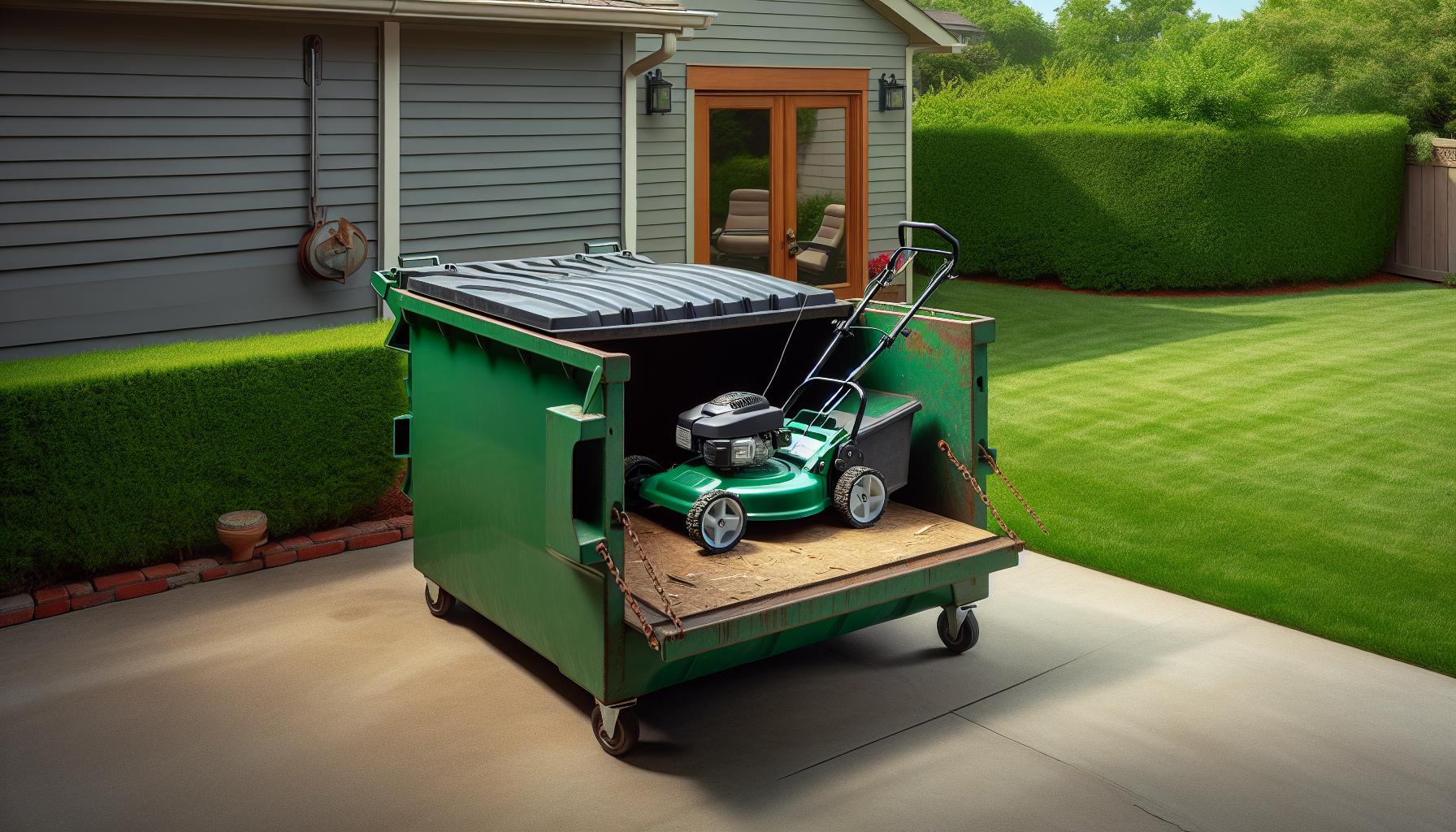
Alternatives to Disposing of Lawn Mowers
Disposing of a lawn mower can be a challenging task, especially when considering the environmental impact and legal ramifications of improper disposal methods. Instead of facing the temptation of simply tossing your old mower in a dumpster, it’s worth exploring several alternatives that can benefit both you and the environment.
One viable option is to donate your lawn mower if it’s still in working condition. Local charities, community gardens, or schools might appreciate the equipment for their landscaping needs. Not only does this keep the mower out of the landfill, but it also promotes community engagement. If donating isn’t an option, consider selling it online through platforms like Craigslist or Facebook Marketplace. Many people are looking for affordable tools, and you could make a little money while providing someone else with a useful item.
Another smart approach is to look for recycling programs specifically geared towards garden or power equipment. Many municipalities have dedicated waste disposal and recycling facilities where you can drop off your lawn mower. Some areas even organize special collection events for hazardous waste, which can include gas-powered equipment. Always check with your local waste management authority to stay informed about these opportunities.
If your mower is beyond repair, you can break it down into salvageable parts. Common components like engines, motors, and wheels may be chosen for resale or recycling. Some scrap yards will pay for metal parts, providing a bit of cash while ensuring the remaining materials are recycled properly. By taking these steps, you not only comply with waste disposal regulations but also contribute positively to environmental sustainability.
Tips for Recycling Your Old Lawn Mower
Recycling your old lawn mower is not only a responsible choice but also an opportunity to minimize waste and give new life to valuable materials. Before you decide how to dispose of your mower, it’s essential to consider effective recycling tips that can maximize its value and sustainability.
One of the most straightforward ways to recycle your lawn mower is to identify if it has working components that can be reused. Check if the motor, blades, or wheels are still functional. Many community centers, schools, or local charities welcome donations of working equipment, as they can use them for landscaping projects or educational purposes. This not only keeps the mower out of landfills but also supports community initiatives.
If the mower is no longer operational, dismantling it into parts can be a rewarding option. Begin by separating the metal from the plastic and rubber components. Many scrap yards pay for metal parts, so you may earn some cash while ensuring that recyclable materials are processed properly. Local recycling centers may accept different materials, so it’s wise to contact them beforehand to find out exactly what they will take.
Before handing over your lawn mower for recycling, it’s essential to follow a few preparation steps. Empty any fuel from the tank to avoid potential hazards during the recycling process. Additionally, clean the mower of any dirt and grass clippings; this not only ensures proper recycling but also makes handling easier for those processing it. Document your efforts, as some local recycling programs may offer incentives or credits for properly recycling equipment.
Finally, consider seeking out local recycling programs specifically geared toward garden equipment. Many municipalities offer designated drop-off sites for hazardous waste or host special collection events. These opportunities help streamline the recycling process and ensure that your lawn mower is disposed of in an environmentally friendly manner. Checking with your local waste management authority can provide you with the most relevant information for your area, facilitating a seamless recycling experience.
State-Specific Guidelines for Lawn Mower Disposal
Disposing of a lawn mower can be more complicated than simply tossing it in the dumpster, as many states have their own specific guidelines to prevent environmental harm and promote recycling. For example, in California, it is illegal to dispose of certain materials, like oil and gasoline found in lawn mowers, in landfills without prior treatment. Residents are encouraged to utilize designated hazardous waste collection events or recycling centers that specialize in disposing of these materials correctly.
In Texas, local laws might also dictate that lawn mowers should not be disposed of in regular trash. Instead, many counties operate recycling programs that allow homeowners to drop off their old mowers at specified locations. Before heading out, it’s advisable to check with your county’s waste management website to get the most current information regarding accepted items and drop-off times.
For those residing in New York, the Department of Environmental Conservation encourages responsible disposal practices. This includes taking the mower to a local scrap yard or participating in community cleanup events focused on recycling and waste reduction. Mowers must first be drained of all oils and fuels to comply with safety regulations.
As guidelines can often vary not only by state but even by municipality, it’s crucial for residents to familiarize themselves with local regulations. To find specific information for your area, you can contact local environmental agencies or consult online resources that outline waste disposal policies. By doing so, you can ensure that your lawn mower is disposed of in a manner that’s both legal and environmentally responsible.
What Happens to Lawn Mowers in Landfills?
Lawn mowers, when disposed of improperly in landfills, can contribute to significant environmental problems. These machines often contain hazardous materials such as oil, gasoline, and batteries, which can leach into the soil and waterways, presenting a threat to ecosystems and public health. When a lawn mower ends up in a landfill, the decomposition process is slow and complicated. Metal components can take years, if not decades, to break down, leading to further space issues in already crowded landfills. Furthermore, if not handled correctly, the fuel and oil residues can contaminate surrounding land and water sources.
In addition to the environmental impacts, improperly disposing of lawn mowers may also lead to legal repercussions. Many jurisdictions have specific laws regarding waste disposal that prevent any hazardous materials from entering landfills. Failure to comply with these regulations can result in fines or other penalties. Residents are encouraged to instead seek local recycling programs or hazardous waste collection events, where lawn mowers can be disposed of or recycled responsibly.
Another major concern is the loss of valuable resources. Lawn mowers are often made of metals that can be recycled. When these machines are sent to landfills, the opportunity to recover these materials is lost forever. Recycling lawn mowers not only conserves resources but also reduces the overall carbon footprint associated with producing new materials. Therefore, understanding the implications of landfill disposal highlights the importance of exploring environmentally friendly alternatives.
To avoid contributing to landfills and protect the environment, it’s essential to explore proper disposal methods, such as contacting local waste management services, utilizing recycling centers, or participating in community disposal programs. By doing so, you not only comply with local regulations but also contribute to a more sustainable future.
How to Prepare Your Lawn Mower for Disposal
Preparing your lawn mower for disposal is a crucial step to ensure you comply with local regulations and minimize environmental impact. Before considering any disposal method, it’s essential to carry out a few preparatory steps that keep safety and sustainability in mind. This helps to effectively manage hazardous materials while maximizing recycling opportunities.
To begin, remove hazardous materials from the lawn mower. Most mowers contain oil, gasoline, and possibly batteries, which can be harmful to the environment if improperly discarded. It’s advisable to drain any remaining fuel into a suitable container for safe disposal at a hazardous waste facility. Oil should also be drained and taken to recycling centers or disposal sites that accept motor oils. For mowers with batteries, check local regulations, as many offer specific drop-off locations for battery recycling.
Next, perform a visual inspection and cleaning of your mower. Remove any grass clippings and debris that may have accumulated. A thorough cleaning not only prevents contamination of other materials during recycling but also makes the mower easier to handle. It’s also wise to dismantle non-essential parts if you’re comfortable doing so; many parts, like metal or plastic components, may be suitable for recycling individually.
Lastly, gather documentation regarding your mower’s condition. If you’re donating it or recycling it through a program that requires it to be in working order, having proof of maintenance or repairs can aid in the process. Providing the mower’s serial number can also facilitate proper recycling or resale. By preparing your lawn mower with these steps, you contribute to responsible disposal practices that align with environmental guidelines and can potentially lead to recycling valuable materials.
Cost Considerations for Lawn Mower Disposal Options
Disposing of a lawn mower can be a surprisingly expensive endeavor, particularly if you do not know your options or local waste disposal regulations. When considering the costs associated with lawn mower disposal, it’s essential to evaluate various methods and their corresponding fees, potential savings, and environmental implications.
One cost-effective approach is to check with local waste management authorities or community programs that may offer free bulky item collection or specific days for hazardous waste disposal. In some municipalities, residents can dispose of items like lawn mowers without a fee if they comply with designated disposal times and locations. However, when dealing with privately-owned waste disposal services, charges can vary significantly-ranging from $15 to $100 or more-depending on the company’s policies and the mower’s weight.
Alternatives to Traditional Disposal
Recycling and repurposing can also present lower-cost or even free alternatives to throwing your mower in a dumpster. Many local recycling centers accept lawn mowers, often charging minimal fees, or they may even provide some compensation for valuable metal components. Donating to non-profits or community gardens can help you avoid disposal fees while also giving your mower a new lease on life. Before donation, ensure your mower is in working condition, which might require minor repairs but can lead to savings when comparing the costs of disposal.
Lastly, if you opt for recycling, consider the environmental impact along with the financial one. Proper disposal methods, while sometimes more expensive upfront, contribute to sustainable waste management practices and reduce landfill accumulation. Investing in eco-friendly disposal aligns with community regulations, promoting a cleaner environment and potentially avoiding fines associated with improper disposal practices.
Ultimately, evaluating the costs of disposal requires a comprehensive look at local services, potential recycling benefits, and community-driven alternatives that may save money while protecting the environment.
Environmental Impact of Improper Lawn Mower Disposal
Improper disposal of lawn mowers can have significant environmental repercussions, making it a pressing concern for both individuals and communities. When lawn mowers are thrown into dumpsters and ultimately landfills, they often end up contributing to a variety of ecological issues that extend beyond mere waste management. For instance, typical lawn mowers contain hazardous materials, including oils, batteries, and fuels, which can leak into the soil and groundwater, posing risks to local ecosystems and drinking water supplies.
Moreover, landfilling mowers means that valuable resources, such as metals and plastics, are wasted. Instead of recycling these materials, which could reduce the demand for new raw materials and limit energy consumption, they are buried and allowed to degrade slowly, often taking decades to break down. This not only accelerates the depletion of natural resources but also increases landfill pressure, which is already a critical issue in many areas.
The ramifications do not stop at local communities. The collective impact of improper waste disposal practices contributes to broader environmental challenges, such as increased greenhouse gas emissions from decomposing organic matter and the carbon footprint associated with mining and manufacturing replacement parts. By not addressing these disposal issues, society effectively perpetuates a cycle of environmental degradation.
To mitigate these impacts, it is essential to seek alternative disposal methods. Here are some actionable steps to consider:
- Contact Recycling Centers: Many local recycling facilities accept lawn mowers and recover valuable materials, minimizing landfill waste.
- Explore Donation Options: Consider donating functional mowers to community gardens or non-profits that can repurpose them.
- Follow Local Regulations: Familiarize yourself with local disposal guidelines to ensure compliance and promote environmentally sound practices.
By opting for environmentally responsible disposal methods, individuals can significantly reduce the negative impacts associated with lawn mower disposal, creating a brighter and more sustainable future.
Finding Local Waste Removal Services and Programs
can be pivotal in ensuring responsible disposal of your lawn mower. Many communities are increasingly recognizing the importance of proper waste management and recycling, offering various programs aimed at reducing landfill waste. By tapping into these local resources, not only can you dispose of your old equipment safely, but you can also contribute positively to your community’s environmental efforts.
Start by checking your local government or municipal website. Many areas provide dedicated pages on waste management services that include drop-off locations, special collection days, or partnerships with recycling facilities. Often, these programs are designed to manage not just lawn mowers, but also other garden equipment and electronics that may contain hazardous materials. Additionally, organizations such as the Environmental Protection Agency (EPA) offer guidance on finding certified recycling centers near you that are equipped to handle such items.
Another effective way to locate these services is through local community groups or forums, which might host events like “clean-up days” offering free or low-cost disposal solutions. Utilizing resources such as Facebook Marketplace or local Buy Nothing groups can also connect you with individuals or organizations looking for used lawn mowers, thereby facilitating a beneficial exchange rather than disposal. Furthermore, consider reaching out to local landscape companies; they often have established relationships with recycling programs and may offer insights or direct services for disposal.
In summary, leveraging local waste removal services and community programs not only aids in the proper disposal of lawn mowers but fosters a culture of sustainability. By taking the initiative to research and engage with these resources, you can ensure that your disposal methods align with environmental best practices and contribute to the overall well-being of your community.
Common Myths About Lawn Mower Disposal
Many homeowners may assume that disposing of an old lawn mower is as simple as throwing it in a dumpster. However, this mindset is fraught with misconceptions that can lead to improper waste management and potential legal issues. One prevalent myth is that all lawn mowers are just bulky items that can easily go into any trash bin. In reality, lawn mowers often contain hazardous materials, such as gasoline, oil, and batteries, that require specialized disposal methods. Disposing of these items in regular waste can not only damage the environment but also violate local waste regulations.
Another common belief is that lawn mowers can simply be taken to the local landfill without any repercussions. Many municipalities have strict guidelines regarding what can be placed in landfills, and lawn mowers typically fall under the category of items that require specific disposal procedures. Some places may even have designated drop-off sites or recycling programs specifically for garden equipment. Ignoring these guidelines can lead to fines or other penalties, making it essential for homeowners to familiarize themselves with local regulations before disposal.
Additionally, some people think that all lawn mowers are recyclable. While it’s true that parts of a lawn mower can often be recycled, the entire unit may not be accepted by all recycling centers. It’s important to check with local facilities to determine whether they accept lawn mowers and what preparation is required beforehand. For instance, some environmentally-friendly centers may require you to drain the fuel and oil before bringing in the mower.
To combat these misconceptions, it is crucial for homeowners to educate themselves on the proper disposal methods for lawn mowers. Utilizing local waste management services, seeking out recycling programs, and engaging community resources can lead to responsible, eco-friendly disposal options. Always be proactive in understanding your area’s regulations and take the right steps to ensure a minimal environmental impact while effectively managing your old lawn equipment.
Q&A
Q: Can I dispose of a lawn mower in a regular dumpster?
A: No, disposing of a lawn mower in a regular dumpster is often prohibited due to safety and environmental regulations. It’s essential to check local waste removal rules as lawn mowers contain hazardous materials like fuel and oil. Refer to the “Understanding Waste Removal Regulations for Lawn Mowers” section for more details.
Q: What are the safest methods to dispose of my lawn mower?
A: The safest methods to dispose of a lawn mower include recycling at a designated facility, donating it if it’s still functional, or using local hazardous waste disposal programs. Check the section on “Alternatives to Disposing of Lawn Mowers” for comprehensive options.
Q: How do I prepare my lawn mower for disposal?
A: To prepare your lawn mower for disposal, empty the fuel and oil tanks, remove any batteries, and clean it thoroughly. This reduces contamination risks and complies with disposal regulations. For step-by-step instructions, see “How to Prepare Your Lawn Mower for Disposal.”
Q: Are lawn mowers recyclable and how?
A: Yes, lawn mowers are recyclable. Many parts, including metal and plastic components, can be processed. Contact a local recycling center or check for specific recycling programs in your area. For tips, see “Tips for Recycling Your Old Lawn Mower.”
Q: What happens if I throw my lawn mower in the landfill?
A: Throwing a lawn mower in the landfill can release harmful pollutants into the environment, including oil and gas. This practice can also violate local waste management laws. Explore “What Happens to Lawn Mowers in Landfills” for more insights into environmental impacts.
Q: When is the best time to dispose of a lawn mower?
A: The best time to dispose of a lawn mower is during designated community cleanup days or special recycling events, typically held in spring or fall. Keep an eye on local announcements for these opportunities. For more information, refer to “Finding Local Waste Removal Services and Programs.”
Q: What are common myths about lawn mower disposal?
A: Common myths include the belief that all lawn mowers can go in the trash or that they are not hazardous. In reality, improper disposal can harm the environment and violate laws. Address these misconceptions in the “Common Myths About Lawn Mower Disposal” section.
Q: Can I donate my old lawn mower to charities?
A: Yes, you can donate your old lawn mower to charities, community gardens, or local schools that may benefit from it. Ensure it’s in working condition and adheres to any donation guidelines. Check the “Alternatives to Disposing of Lawn Mowers” section for more details.
Key Takeaways
If you’re still unsure about disposing of your lawn mower, remember that there are safe alternatives to tossing it in a dumpster. Explore local recycling programs or waste management services that can assist you with proper disposal options specific to your area. For more tips, check out our related articles on eco-friendly lawn care and effective waste management strategies.
Don’t let your old lawn equipment take up space any longer-act now! Whether it’s finding a suitable disposal service or learning about how to refurbish your lawn mower, you have options at your fingertips. Subscribe to our newsletter for updates and expert advice on lawn care and waste removal, and share your experience in the comments below. Your feedback can help others in the community navigate their waste management challenges while keeping our planet clean!