
When maintaining your lawn mower, one question often arises: is lawn mower oil the same as car oil? Understanding the differences and similarities between these two types of oils is crucial for ensuring your mower runs efficiently and lasts longer. Many homeowners grapple with the dilemma of whether they can save time and money by using car oil in their small engines.
This article dives into the specifics that every DIYer should know, addressing common misconceptions and providing critical insights on selecting the right oil for your mower. By the end, you’ll feel empowered to make informed decisions that not only enhance the performance of your lawn mower but also ensure its longevity. Get ready to cut through the confusion as we explore the truths about lawn mower and car oil!
Is Lawn Mower Oil the Same as Car Oil? Understanding the Basics
While many homeowners might assume that lawn mower oil and car oil are interchangeable, the truth is that these two types of oil serve distinct purposes and have unique formulations tailored to their specific engines. Understanding the fundamental differences is crucial for maintaining the longevity and performance of your lawn mower. For starters, lawn mower engines typically operate at higher temperatures and consist of fewer moving parts compared to car engines, which influences the type of oil that should be used.
Lawn mower oils are often formulated as monograde oils, such as SAE 30, which are designed to function effectively under the conditions experienced by small engines. In contrast, automotive oils are typically multigrade oils designed to provide optimal performance over a wider temperature range and under more demanding driving conditions. This is particularly important for vehicles that experience significant variations in engine temperatures and loads. Moreover, many lawn mower oils contain additives that help protect the engine from wear and tear, including special zinc compounds that are not commonly found in all automotive oils. This protective feature not only enhances engine efficiency but also helps prolong the life of the mower’s motor components [[1]].
When considering whether to use car oil in your mower, it’s essential to evaluate the specific requirements provided by the mower’s manufacturer. Some brands may state that automotive oils are acceptable; however, using oils that are specifically designed for lawn mowers can be beneficial in terms of optimal performance and maintenance. Ultimately, selecting the right oil is about ensuring that your lawn mower remains in excellent working condition, reflecting the significant differences in engine requirements between lawn mowers and automobiles [[3]].
The Key Differences Between Lawn Mower Oil and Car Oil
While it might be tempting to use car oil in your lawn mower, understanding the distinctions between these two types of oil is essential for optimal performance and maintenance. One of the most significant differences lies in their formulations tailored to the respective engines. Lawn mower oils are frequently formulated as monograde oils, such as SAE 30, designed specifically to perform well under the consistent, higher-temperature conditions characteristic of small engines. This simplicity caters to the straightforward operational needs of lawn mowers, where the engine is not subjected to the wide temperature fluctuations and stress that automotive engines experience.
In contrast, automotive oils are designed as multigrade oils, which means they can perform well across a broader range of temperatures and operating conditions. This versatility is vital for vehicles, as they operate under varying loads and temperatures, requiring oils capable of maintaining viscosity and performance under those conditions. The complexity of automotive engines, which have more moving parts and face more extreme operational demands, necessitates a more sophisticated oil formulation that is often not needed in a lawn mower’s straightforward design.
Another crucial difference is the additive packages used in these oils. Many lawn mower oils contain specific additives, such as zinc, which provide enhanced protection against wear. These additives are crucial for maintaining engine health and longevity, particularly in the higher-stress environment of lawn mower operation. In contrast, car oils may contain different types of additives that cater to the needs of complex automotive engines, where factors such as fuel efficiency and emissions control are more critical.
Before deciding which oil to use, it’s important to review your lawn mower’s manufacturer recommendations. While some may allow automotive oils, using lawn mower-specific oils can lead to better performance and a longer lifespan for your equipment. Understanding these differences not only helps in making an informed choice but ultimately extends the longevity and efficiency of your lawn mower.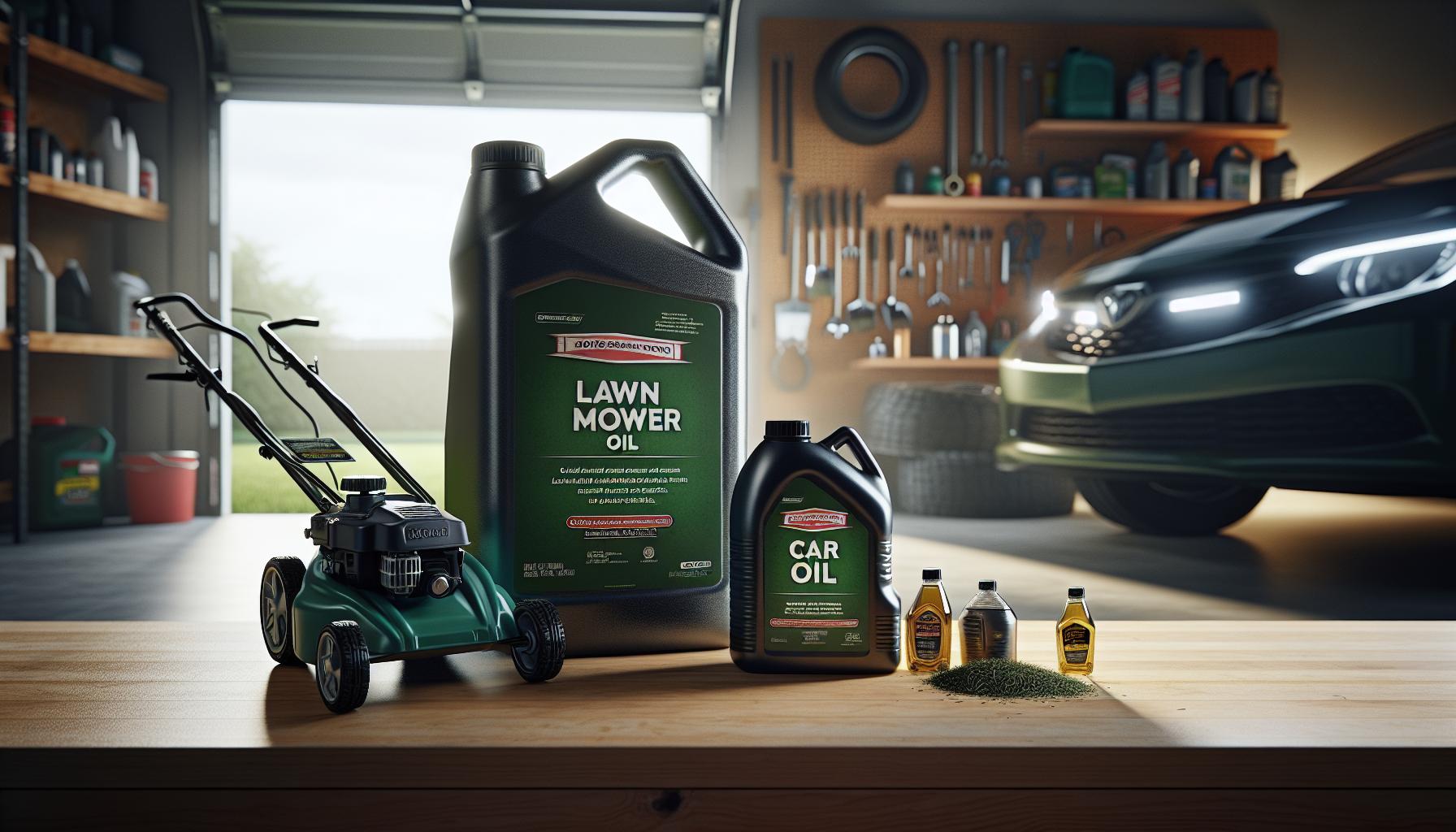
How to Choose the Right Oil for Your Lawn Mower
Choosing the right oil for your lawn mower is pivotal for its performance and longevity. Many mower owners assume that any type of oil will suffice, but using the appropriate oil can significantly affect efficiency and engine health. Understanding the specific needs of your mower’s engine type and operating conditions is essential to making an informed decision.
Start by consulting your mower’s owner manual, which usually outlines the recommended oil type and viscosity. Most manufacturers suggest monograde oils like SAE 30, especially for warm weather conditions. If you expect to use your mower in varying temperatures, then a multigrade oil such as 10W30 might be suitable, but ensure it meets your mower’s specifications. The viscosity rating indicates how thick the oil is at different temperatures; for example, a lower number indicates better performance in cooler conditions, while a higher number can be beneficial in hot climates.
When selecting oil, consider the additives that different formulations include. Oils specifically designed for lawn mowers often have additives that enhance wear protection and maintain engine cleanliness. Some products include zinc, an additive not routinely found in car oils, which helps protect small engines under the steady load they experience. Make sure to check for these essential features if you’re opting for a non-specialized oil.
Lastly, be mindful of where you purchase your oil. Specialty lawn mower oils can usually be found at home improvement stores, garden centers, or online. Always avoid mixing different oil types and brands, as this can lead to undesirable results and potential engine damage. By prioritizing the correct oil and adhering to manufacturer guidelines, you will significantly enhance your mower’s performance and lifespan, ensuring it runs smoothly for years to come.
What You Need to Know About Oil Viscosity Ratings
Choosing the right oil for your lawn mower hinges heavily on understanding oil viscosity ratings, a critical aspect often overlooked by many lawn care enthusiasts. Viscosity, in simple terms, is the measure of an oil’s thickness and ability to flow, which changes with temperature. This means that an oil’s performance can significantly fluctuate depending on the conditions in which it operates. For instance, a lawn mower running in cooler temperatures will benefit from a thinner oil, which can reach moving parts quickly, while a thicker oil might be more advantageous in hotter environments where it can maintain a protective film.
Viscosity ratings are typically indicated on oil containers in the format “XXW-YY” where “XX” represents the oil’s viscosity at colder temperatures and “YY” is its viscosity at higher temperatures. For example, 10W-30 oil has a viscosity rating of 10 in cold conditions and 30 when heated. This multi-viscosity characteristic allows the oil to provide adequate protection during varying seasonal conditions; it flows well when starting your mower in cool weather but thickens up to protect moving parts in high heat, reducing wear and tear.
Selecting the right viscosity is particularly crucial for lawn mowers that experience consistent load and heat during operation. Oils specifically formulated for lawn mowers often have engineered viscosity ratings tailored for small engines, which typically run hotter and require better protection against breakdown. Additionally, this specialization can include unique additives-such as detergents-to keep the engine clean and performance-enhancing agents not commonly found in standard vehicle oils.
Understanding these ratings not only helps to ensure your mower operates efficiently but also extends its service life. Utilizing the manufacturer’s recommendations for oil viscosity-found in your mower’s owner manual-is advisable. This practice minimizes the risk of engine damage and ensures optimal performance under the conditions your mower is most frequently used.
When to Change Lawn Mower Oil vs. Car Oil
Regular oil changes are essential for maintaining the lifespan and efficiency of both lawn mowers and cars, but the frequency and justification for these changes can differ significantly between the two. Understanding when to change the oil in your lawn mower versus your car can help prevent engine issues and promote optimal performance.
For lawn mowers, the general recommendation is to change the oil after every 50 hours of operation or at least once per season. This is particularly important for small engines that run at higher temperatures and face more fluctuations in operating conditions compared to automotive engines. Frequent oil changes help remove contaminants such as dirt, grass clippings, and debris that can accumulate and degrade engine performance. If you primarily use your mower in dusty or sandy areas, consider changing the oil more often, as these conditions can significantly increase the oil’s contamination rate.
In contrast, most vehicles have a longer oil change interval, typically every 5,000 to 7,500 miles, depending on the type of oil used, driving conditions, and manufacturer recommendations. Modern synthetic oils can extend this interval, providing better protection and performance over time. Car engines are designed to operate efficiently across varying conditions, but even they require scheduled maintenance to manage the build-up of combustion byproducts and maintain lubrication properties.
It’s crucial to adhere to the specific guidelines provided in the owner’s manual for both your mower and your car, as this will ensure that you are not only optimizing performance but also protecting your investment. Skipping oil changes can lead to serious issues-like overheating in lawn mowers or major engine damage in cars-making it essential to schedule these routine tasks effectively.
Myths About Lawn Mower Oil You Should Stop Believing
Those who own lawn mowers often harbor several misconceptions about engine oil, particularly regarding the differences between lawn mower oil and car oil. One prevalent myth is that all engine oils are interchangeable. While it’s true that some oils can be used in both, such as conventional SAE 30 oil in small engines, there are key differences that affect performance and engine health. For example, lawn mower oils often contain additives that help manage the higher temperatures and operational stresses that small engines frequently endure. Ignoring these differences can lead to suboptimal performance and reduced longevity of your mower.
Another common belief is that premium lawn mower oil is always necessary for optimal operation. In reality, standard automotive oil can be used effectively in many situations; however, it’s crucial to check the specifications and recommendations in your mower’s manual. Many mowers operate fine with an oil that meets the same viscosity ratings as the recommended oil. By focusing solely on the label and overlooking the basic requirements of the oil, you might be spending more than necessary without any tangible benefit.
Some believe that changing oil more frequently than recommended is always better. While keeping oil clean is vital for performance, excessive changes can lead to wastage and unnecessary costs. For lawn mowers, changing the oil after every 50 hours of operation is generally sufficient unless operating under extreme conditions. This is in stark contrast to cars, where longer intervals are often recommended. Familiarizing yourself with the specific needs of your equipment is essential to avoid unnecessary maintenance.
Lastly, there is a myth that synthetic oils are only for cars and not suitable for lawn mowers. In fact, there are synthetic oils available that are specifically formulated for small engines and can provide greater protection, especially under extreme temperatures. Choosing the right type of synthetic oil can enhance performance and extend engine life, so it’s worth considering the various options available based on your mower’s needs.
Recognizing these myths can help lawn mower owners make informed decisions when it comes to oil usage, ensuring their equipment runs smoothly and efficiently for years to come.
Common Mistakes in Choosing Engine Oil for Your Equipment
Choosing the right engine oil for your lawn mower can significantly affect its performance and longevity, yet many owners overlook critical details during this process. One common mistake is assuming that any oil can work interchangeably across different types of engines. While some oils, like conventional SAE 30, are suitable for both lawn mowers and cars, this is not the case for every type of oil. For instance, automotive oil is often a multigrade oil, which may not provide the same level of protection under the specific operating conditions of a lawn mower. Understanding the unique requirements of your equipment is key.
Another frequent error is neglecting to consult the owner’s manual before selecting oil. Many users gravitate toward branded or specialized lawn mower oils, believing they offer the best protection. While this can be true, it’s essential to first check what viscosity rating and type of oil the manufacturer specifically recommends. By choosing oil that meets or exceeds these guidelines, you can save money without sacrificing performance. Remember, not all lawn mowers require premium oil; standard automotive oil may perform adequately in many situations.
Furthermore, some lawn mower owners tend to change their oil too frequently, driven by the belief that more care translates into better upkeep. However, this practice can lead to unnecessary costs and waste. Typically, changing the oil after every 50 hours of operation is sufficient unless you’re mowing under particularly strenuous conditions. Being aware of the correct intervals allows you to spend less time on maintenance and more on enjoying your well-kept lawn.
Finally, the misconception that synthetic oils are not suitable for small engines could lead lawn mower owners to miss out on enhanced performance benefits. There are synthetic oils designed specifically for small engines that can provide better protection and efficiency, particularly in extreme temperatures. Exploring these options may prevent potential issues and extend the lifespan of your equipment. By avoiding these common pitfalls, you can ensure that your lawn mower runs smoothly and efficiently for years to come, ultimately protecting your investment in lawn care.
Understanding Synthetic vs. Conventional Oils for Lawn Mowers
The decision between synthetic and conventional oils for your lawn mower can significantly impact its performance and longevity. Many users might assume that if an oil is good enough for their car, it will suffice for their mower as well. However, the truth is more nuanced. Synthetic oils, which are engineered from chemical compounds, offer superior stability and performance across a wider range of temperatures compared to conventional oils, which are derived from refining crude oil. This can result in better engine protection, particularly in extreme weather conditions.
The Advantages of Synthetic Oils
Using synthetic oil in your lawn mower can provide several key benefits:
- Enhanced Performance: Synthetic oils are designed to flow better at low temperatures and maintain viscosity at high temperatures, leading to more efficient engine operation.
- Lower Volatility: They tend to evaporate less compared to conventional oils, which can reduce the frequency of oil top-ups and changes.
- Improved Protection: Synthetic oils can better resist thermal breakdown and can help protect engine components from wear, particularly under heavy loads.
- Longer Oil Change Intervals: Users can often extend oil change intervals based on the higher stability of synthetic oils, saving time and resources.
Understanding Conventional Oils
Conventional oils, on the other hand, are a more economical choice for those who perform routine maintenance without the need for high-performance demands. They effectively meet the lubrication needs of most standard lawn mowers, especially when used in moderate environments. Still, they may not provide the same level of protection and efficiency as synthetic options, particularly when operating in less-than-ideal conditions.
When deciding which type of oil to use, consider the operating conditions of your lawn mower, your maintenance habits, and your budget. For regular users mowing in varying climates or demanding conditions, synthetic oil may prove to be the wiser investment. However, for occasional mowing or in standard summer conditions, conventional oil may be sufficient without breaking the bank. Thus, understanding these differences is crucial for making an informed decision that will keep your lawn mower running smoothly, maximizing both performance and lifespan.
Environmental Impact of Different Engine Oils
The choice of engine oil for your lawn mower can have significant environmental implications, often overlooked by many users. While it may seem trivial, the type of oil you select can affect air quality, water pollution, and wildlife. Understanding these impacts can help you make informed decisions that benefit both your equipment and the planet.
When considering lawn mower oil, it’s essential to note that conventional oils, derived from crude oil, can release harmful emissions during their production and combustion. Additionally, the disposal of used oil requires caution, as improper disposal can lead to soil and water contamination. In contrast, synthetic oils are often engineered to produce fewer volatile organic compounds (VOCs) and can have a more favorable environmental profile, as they typically result in lower overall emissions during use. Furthermore, synthetic oils may last longer than conventional ones, reducing the frequency of oil changes and minimizing waste.
If you are aiming to lessen your environmental footprint, consider switching to eco-friendly alternatives. Biodegradable oils are available in the market, specifically formulated to break down naturally and minimize ecological disruption. These oils can be a more sustainable choice, especially for those who are environmentally conscious or live in regions where water quality is a pressing concern.
Lastly, proper storage and disposal of engine oils are crucial for reducing negative environmental impacts. Always store oil in sealed containers to prevent leaks and ensure that you dispose of used oil at designated recycling centers. Many local automotive shops or waste disposal facilities offer recycling services, providing an easy way to contribute to environmental preservation. By being mindful of your oil choices and disposal methods, you can help create a cleaner and healthier environment while maintaining your lawn mower’s performance.
Tips for Properly Storing and Disposing of Lawn Mower Oil
Properly handling lawn mower oil is crucial not only for maintaining your equipment but also for protecting the environment. Did you know that disposing of used oil incorrectly can lead to severe pollution of local ecosystems? By following some simple guidelines for storage and disposal, you can ensure that you are taking care of both your mower and the planet.
To begin with, always store your lawn mower oil in a cool, dry place away from direct sunlight and heat sources. Utilize sealed containers specifically designed for oil storage to prevent leaks and spills. Clearly label the containers with the type of oil they hold, including the date of purchase or when the oil was changed. This practice not only helps you keep track of shelf life but also aids in avoiding cross-contamination when more than one type of oil is stored.
When it comes to disposal, never pour used oil down the drain or into the ground. Instead, collect the used oil in a suitable container and take it to a local recycling center or automotive shop that accepts used oils. Many municipalities have special days or events for hazardous waste disposal, so be sure to check with your local waste management guidelines. This environmentally responsible action not only helps in recycling the oil but also minimizes the risk of soil and water contamination.
In addition to proper storage and disposal, consider transitioning to biodegradable oils, which can break down more efficiently in the environment. This choice is particularly beneficial if you’re conscious about your ecological footprint. By being mindful of how you store and dispose of lawn mower oil, you contribute significantly to a cleaner, healthier environment while ensuring your equipment runs efficiently for years to come.
User Experiences: Real Stories About Oil Choices
Many lawn care enthusiasts have distinct experiences regarding their choice of oil for lawn mowers, often shaped by a mixture of convenience, performance, and hard-earned lessons. One user, Sarah, recalls her initial choice to use automotive oil in her mower. Unaware of the differences, she poured in some leftover 10W-30 car oil, believing it would get the job done. However, after a short period, her mower started sputtering and eventually stalled. Research revealed that automotive oils are typically detergent oils, not quite suitable for the high heat and specific needs of small engines. This prompted Sarah to switch to a dedicated lawn mower oil, leading to a noticeable improvement in her mower’s performance and longevity.
Another insightful story comes from Tom, a long-time landscaper who swears by using SAE 30 oil in all of his mowers, regardless of make or model. His reasoning is straightforward: he appreciates how SAE 30 caters specifically to the needs of small engines, providing optimal viscosity in hot operating conditions. Tom highlights that sticking to this oil has not only reduced the frequency of his engine repairs but also allowed for smoother operation. He emphasizes that the right oil choice has led to time savings in maintenance, which is crucial during peak mowing season.
Users also share their experiences regarding the cost-effectiveness of different oil types. Jessica, who carefully analyzes her expenses as a DIY homeowner, has opted for biodegradable oils. She notes that, while they may have a slightly higher upfront cost, they save her money in the long run by prolonging her mower’s lifespan and reducing environmental impact. This choice aligns with her values, as she appreciates supporting sustainable practices while ensuring her equipment runs efficiently.
These user stories underscore the importance of understanding the type of oil being used, as well as the specific requirements of lawn mowers compared to cars. From performance benefits to environmental concerns, these real-life experiences offer valuable insights for anyone looking to make informed oil choices for their lawn care equipment.
Maintenance Tips for Lawn Mowers to Extend Lifespan
Regular maintenance of your lawn mower can significantly extend its lifespan, enhance performance, and prevent costly repairs. A well-maintained mower not only runs more efficiently but also saves you time and money in the long run. Here are some essential maintenance tips that every lawn mower owner should keep in mind.
Change the Oil Regularly
One of the most crucial steps in lawn mower maintenance is to regularly change the oil. Unlike cars, mowers typically require oil changes more frequently due to the specific needs of their small engines. Use the manufacturer-recommended oil type, such as SAE 30 for warmer months, which caters specifically to small engines. Regular oil changes help to prevent engine seizing and maintain optimal performance.
Inspect and Replace Filters
Air and fuel filters are vital components that ensure your mower operates efficiently. Check the air filter frequently and replace it if it’s dirty or clogged to maintain proper airflow to the engine. Similarly, inspect the fuel filter and replace it annually or as needed, as this prevents debris from contaminating the fuel system.
Sharpen the Blades
Dull blades can damage grass and reduce the overall aesthetic of your lawn. It’s essential to sharpen your mower blades at the beginning of each mowing season and periodically during heavy use. Sharp blades cut cleanly, promoting healthy grass growth and reducing the stress on your mower’s engine.
Check the Spark Plug
The spark plug is a small yet vital part of your mower engine. Over time, it can become worn or dirty, leading to poor performance or difficulty starting. Inspect the spark plug periodically and replace it if necessary, typically once a season or every 100 hours of operation. A clean, well-functioning spark plug ensures a smoother start and better overall efficiency.
- Store Properly: At the end of the mowing season, make sure you store your mower in a dry area, ideally indoors. This helps prevent rust and keeps the engine in optimal condition.
- Clean After Use: Cleaning the deck and removing grass clippings after each use prevents buildup that can lead to rust and corrosion.
By implementing these maintenance tips, you not only ensure that your lawn mower runs smoothly but also prolong its life and efficiency, making your lawn care routine more effective and enjoyable. Proper care can turn your mower into a reliable partner for years to come.
Frequently asked questions
Q: Can I use car oil in my lawn mower?
A: Yes, you can use car oil in your lawn mower, but it’s essential to select the right type. SAE 30 oil is recommended for small engines, as it provides adequate lubrication under varying temperatures. For more details, refer to the section on choosing the right oil in your article.
Q: What are the benefits of using lawn mower-specific oil?
A: Lawn mower-specific oil often contains additives, such as zinc, which enhance performance in small engines. These oils are formulated to withstand higher temperatures and pressures typical of lawn mowers. For a deeper understanding, check the key differences section in your article.
Q: How often should I change the oil in my lawn mower?
A: You should change the oil in your lawn mower every 20-50 hours of operation, or at least once a season. Checking the oil level and consistency regularly will help maintain optimal engine performance. Refer to the section about changing oil for more guidance.
Q: Is synthetic oil better for lawn mowers compared to conventional oil?
A: Synthetic oil can provide better protection and performance, particularly in extreme temperatures. It tends to last longer than conventional oil, reducing the frequency of changes. Explore the section on synthetic vs. conventional oils for more insights.
Q: What is the correct viscosity for lawn mower oil?
A: The correct viscosity for most lawn mowers is typically SAE 30 for warmer months and 10W-30 for cooler conditions. It’s crucial to consult your mower’s manual for specific recommendations. Details on oil viscosity ratings can be found in your article.
Q: Can using the wrong oil damage my lawn mower?
A: Yes, using the wrong type or viscosity of oil can lead to inadequate lubrication and may cause engine damage. Always select oil that meets the manufacturer’s specifications to avoid costly repairs. More on common oil mistakes is covered in your article.
Q: How should I store leftover lawn mower oil?
A: Leftover lawn mower oil should be stored in a cool, dry place, in a sealed container to prevent contamination. Always label the container and dispose of any unused oil responsibly. For storage tips, look at the section on properly storing oil in your article.
Q: Is there an environmental impact of lawn mower oil?
A: Yes, both conventional and synthetic lawn mower oils can have environmental impacts, such as pollution from improper disposal. Using biodegradable options or ensuring proper disposal practices can mitigate these effects. Refer to the section discussing the environmental impact for more details.
In Conclusion
In conclusion, understanding the differences between lawn mower oil and car oil is crucial for optimizing your lawn care maintenance. Using the right oil not only prolongs the life of your mower but also ensures optimal performance. If you still have questions about choosing the right oil or other maintenance tips, check out our articles on lawn mower maintenance essentials and the best oils for your garden equipment for valuable insights.
Don’t forget to subscribe to our newsletter for the latest tips and exclusive offers directly in your inbox! Your lawn deserves the best care-take the next step and explore our recommended products today. Join the conversation by leaving a comment or sharing your experiences; we love hearing from you! Remember, a well-maintained lawn starts with informed choices.