
Did you know that using the wrong type of oil in your lawn mower can lead to costly repairs and diminished performance? Many homeowners wonder if car engine oil can serve as a substitute for the specialized oil designed for lawn mowers. While it may seem convenient, the implications for your mower’s health are significant.
In this guide, we’ll dive into the expert verdict on using car engine oil in lawn mowers. We’ll explore the potential risks, the differences in oil formulations, and why using the right type of oil is crucial for maintaining your mower’s efficiency and longevity. Understanding these factors can save you time, money, and frustration, ensuring your lawn remains beautifully manicured. Keep reading to learn what you really need to know before pouring that oil in!
Can You Use Car Engine Oil in Lawn Mowers? A Comparative Analysis
Using car engine oil in lawn mowers is a topic that often sparks considerable debate among DIY enthusiasts and professional lawn care providers alike. While some may assume that oils formulated for cars are suitable for any type of engine, this assumption overlooks important differences between automotive and small engine lubricants. Lawn mowers typically operate at higher RPMs, different temperature ranges, and often encounter more debris compared to car engines, which can affect oil performance. This foundational distinction makes it crucial to evaluate whether car engine oil can adequately meet the needs of a lawn mower’s engine.
One prominent difference lies in the composition of the oils. Car engine oils usually include additives that cater to the specific demands of automotive engines-such as leveling against high temperatures and providing sludge and deposit control in longer running cycles. On the other hand, lawn mower oils are specifically designed to handle the unique requirements of smaller, high-revving engines, which often face intense conditions like dirt and varying load. Moreover, most lawn mowers, especially those with 2-cycle and 4-cycle engines, benefit from oils that provide superior anti-wear protection and improve engine cleanliness, which synthetic lawn mower oils are often formulated to achieve.
Despite certain advantages of using car engine oil, there are risks associated with this practice: using oil not specifically intended for lawn mowers can lead to inadequate lubrication and increased wear, ultimately damaging the engine over time. For instance, improper viscosity may result in oil not flowing appropriately, especially in colder temperatures or under heavy loads, leading to engine malfunction or even failure. Furthermore, many manufacturers recommend oils that comply with specific standards tailored for their equipment, indicating a clear preference over generic automotive alternatives.
In conclusion, while it may be tempting to use car engine oil as a convenient alternative, the differences in formulation and intended use highlight the risks inherent in that choice. Understanding these nuances empowers users to make informed decisions about oil selection, ensuring the health and longevity of their lawn mowers. By choosing oils specifically designed for lawn equipment, you can achieve optimal performance and protect your investment in lawn care.
Understanding Engine Oil Types for Lawn Equipment
When it comes to maintaining lawn mowers, understanding the various types of engine oil is crucial for ensuring optimal performance and longevity. Unlike car engines, which operate under more controlled conditions, lawn mowers frequently encounter a mix of debris, varying loads, and often run at higher RPMs. This unique environment calls for specific oil formulations that are fine-tuned to protect small engine components.
Lawn mower oils generally fall into two categories: 4-cycle and 2-cycle oils. 4-cycle oils are used in engines with a dedicated lubrication system and are designed to provide effective protection against wear and tear. They typically contain additives that prevent oxidation and help maintain the engine’s cleanliness. Meanwhile, 2-cycle oils are mixed with fuel in engines that do not have a separate lubrication system, requiring them to provide lubrication and combustion efficiency in one product. These oils often include special detergents to keep the engine free of carbon buildup and promote smooth operation.
The viscosity of the oil is also an essential factor. Lawn mowers typically operate in a temperature range that requires oils with specific viscosity ratings to ensure proper flow and lubrication under varying operational conditions. For instance, using the wrong viscosity can lead to poor lubrication, especially during colder starts, which can ultimately affect engine performance and lifespan. Manufacturers often recommend oil grades that are tested under specific conditions to meet the unique demands of lawn mower engines, emphasizing the importance of following these guidelines.
In summary, choosing the right engine oil for lawn equipment is not just a preference but a necessity based on the operational demands and conditions of small engines. Opting for oils specifically formulated for lawn mowers can help ensure better performance, efficiency, and longevity of the equipment, protecting your investment in lawn care when tackling those outdoor tasks.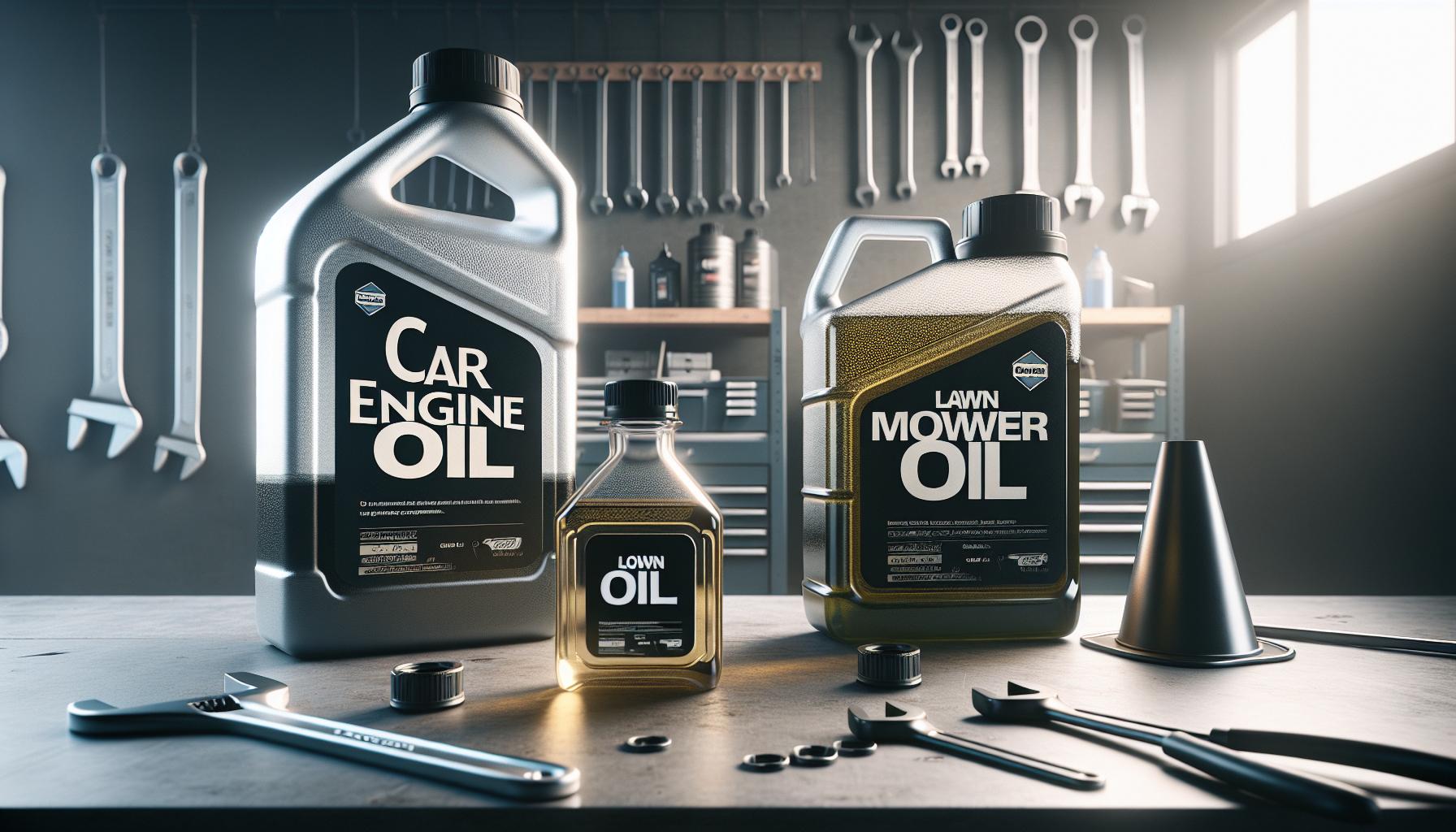
Differences Between Car Engine Oil and Lawn Mower Oil
When considering the use of car engine oil in lawn mowers, it’s essential to recognize the fundamental differences between the two oil types. Car engine oils are engineered to meet the requirements of larger, more complex engines that operate under different conditions compared to the small engines found in lawn mowers. This distinction plays a critical role in the performance and longevity of both the engine and the oil itself.
Car oils generally contain a blend of additives designed to protect against higher levels of heat and stress, to meet stringent emissions standards, and to function effectively in a wider temperature range. They are typically developed for engines that are far more versatile and heavily loaded, sometimes resulting in higher friction and wear. In contrast, lawn mower oils are specifically formulated for the lower RPMs and unique operational conditions found in small engines. They often incorporate detergents to combat carbon build-up and to maintain engine cleanliness, which is less of a concern in cars due to their larger oil capacities and more advanced filtration systems.
The viscosity ratings between car and lawn mower oils also differ. Lawn mowers typically require oils with specific viscosity grades that allow for optimal lubrication, especially during colder starts. For instance, SAE 30 is a common choice for warmer temperatures, while 10W-30 is often recommended for varying conditions. Using car oils, which may have different viscosity characteristics than those recommended for lawn mowers, can lead to inadequate lubrication, especially during start-up periods or in fluctuating temperatures.
In summary, while using car engine oil in a lawn mower may seem like a convenient option, it can lead to suboptimal performance and potentially damage the engine over time. To ensure the best longevity and efficiency for your lawn mower, it’s advisable to stick with oils formulated specifically for small engines, adhering to the manufacturer’s recommendations for oil type and viscosity.
Potential Risks of Using Car Oil in Your Mower
Using car engine oil in your lawn mower may seem like a quick fix, but it carries significant risks that can jeopardize the health of your mower’s engine. One of the primary concerns is that car engine oils are designed for much larger, more complex engines that operate under different conditions compared to those found in lawn mowers. They utilize a unique blend of additives engineered to handle high temperatures and stress levels which simply do not occur within the small engines of typical lawn mowers. This mismatch can lead to inefficiencies, as the oil may not provide adequate protection or performance for the specific demands of a mower’s engine.
The viscosity ratings of car oils also diverge from those recommended for lawn mowers. For instance, lawn mowers often require oils like SAE 30 or 10W-30, which are tailored to provide optimal lubrication at lower RPMs and temperatures encountered during typical operation. If a car oil with a different viscosity is used, it can result in poor lubrication, particularly during cold starts. In such cases, a mower might experience increased wear and tear due to insufficient oil flow, leading to potential engine damage over time.
Furthermore, the use of car engine oil can exacerbate issues like carbon buildup, as these oils lack the necessary detergents specifically included in lawn mower oils to maintain engine cleanliness. This can result in clogged components, reduced efficiency, and ultimately, expensive repairs. Additionally, because car oils are formulated for longer oil change intervals and larger systems, users might neglect the regular oil changes that lawn mowers require, worsening these issues.
In summary, while it may be tempting to substitute car engine oil for lawn mower oil, the potential risks-including improper lubrication, inadequate cleaning, and premature engine wear-make it a gamble not worth taking. To ensure the longevity and optimal performance of your lawn mower, it is always best to use oils that are specifically designed for small engines, adhering to the manufacturer’s specifications for type and viscosity.
Expert Recommendations: Suitable Oil for Lawn Mowers
When it comes to maintaining the health and efficiency of your lawn mower, the choice of engine oil plays a vital role. Selecting an oil specifically designed for small engines can significantly extend the life of your mower and enhance its performance. It’s crucial to use the right oil, as lawn mowers operate under different conditions than cars, and their engines are tailored to handle fewer RPMs with varying cooling needs. Using unsuitable oil can lead to serious damage; hence, it’s essential to consider expert recommendations for the best oil types.
Most lawn mower manufacturers recommend using oil with a viscosity rating of SAE 30 or 10W-30 for optimal performance. These oils are formulated to provide reliable lubrication at the lower temperatures typical in mowers, ensuring sufficient protection at startup and during regular operation. It’s wise to check your mower’s manual for specific viscosity requirements, as some newer models may even benefit from synthetic oils designed specifically for small engines, which can offer better thermal stability and cleaning properties.
Additionally, consider oils that include detergents. These additives help prevent carbon deposits and sludge buildup, keeping your engine cleaner and more efficient over time. Some manufacturers, like Briggs & Stratton and Honda, offer their branded oils, which are tested extensively to ensure compatibility and superior performance under lawn mower conditions. Using these specially formulated oils can lead to cleaner engine operation, fewer maintenance issues, and potentially lower long-term costs associated with repairs.
Lastly, remember that oil change intervals for lawn mowers are generally shorter than those for cars, often recommended every 50 hours of operation or at least once a season. By staying proactive about oil changes and using the right type of oil, you will ensure your lawn mower runs smoothly and efficiently, keeping your lawn pristine with minimal hassle.
Signs of Incorrect Oil Use in Your Lawn Mower
When you invest time and money into maintaining your lawn mower, the last thing you want is to inadvertently cause damage due to incorrect oil use. The oil you choose can significantly affect your mower’s performance, and using car engine oil in place of specially formulated lawn mower oil might lead to a series of telltale signs indicating something is wrong. One of the most immediate indicators is engine overheating. Lawn mowers, especially those designed for small engines, have different cooling requirements than cars. If you notice your mower emitting excessive heat or even smoke, that could be a strong sign that the oil you’re using isn’t up to par.
Another noticeable sign is reduced performance during operation. This might manifest as a lack of power, stalling, or unusual noise, which could indicate that the oil isn’t lubricating the engine components as effectively as needed. Car oils, while suitable for their intended engines, often lack specific additives that cater to the needs of lawn mowers, which can lead to inefficiencies. If your mower is running roughly or producing strange sounds, it’s time to reassess the oil situation.
Additionally, a visual check of the oil itself can provide critical feedback. Oil that appears darker, thicker, or has developed a sludge-like consistency signifies that it has degraded and may no longer provide adequate lubrication. Regularly checking the oil’s condition can help you catch potential issues early on and prevent more serious damage down the line. Lastly, if you start to see unusual engine wear or if your mower engine shows signs such as excessive vibration or decreased fuel efficiency, these could all point to problems stemming from using incorrect oil.
By remaining vigilant for these signs, you can take proactive steps to ensure your lawn mower remains in peak condition. Always remember that using the right oil not only improves performance but also prolongs the life of your mower.
How to Properly Change Lawn Mower Oil
Changing the oil in your lawn mower is an essential maintenance task that helps ensure optimal performance and longevity of the engine. Surprisingly, many mower owners overlook this simple procedure, often leading to issues that can affect operation and efficiency. Proper oil change not only removes contaminants that accumulate over time but also replenishes the crucial lubricants that keep the engine running smoothly. Here’s a step-by-step guide to help you through the oil change process.
Begin by gathering your supplies: you’ll need fresh lawn mower oil (consult your owner’s manual for the right type and quantity), a drain pan, an oil filter (if applicable), a wrench, and a funnel. Ensure your mower is parked on a level surface and the engine is cool. Safety first! Disconnect the spark plug wire to prevent accidental starting during the oil change.
Next, locate the oil drain plug, usually positioned at the base of the engine. Place the drain pan beneath the plug and remove it carefully. Allow the old oil to fully drain out; this might take several minutes. If your mower has an oil filter, it’s a good idea to replace it at this time as well. Use an oil filter wrench to loosen it, then lubricate the rubber gasket of the new filter with fresh oil before installing it.
Once the old oil is drained and the new oil filter is in place, it’s time to add the fresh oil. Use the funnel to pour the recommended amount of oil into the oil fill tube. Check the dipstick regularly to ensure you don’t overfill. After adding oil, replace the oil drain plug securely. Finally, reconnect the spark plug wire, start the mower, and let it run for a minute to circulate the new oil. Check for leaks around the drain plug and filter as a precaution.
Performing this easy task regularly will enhance your mower’s efficiency and prevent potential damage from degraded oil. It’s recommended to change the oil after every 50 hours of operation or at the beginning of the mowing season for best results. By following these steps, you’ll keep your mower in prime working condition, allowing you to conquer your yard tasks with ease and confidence.
Environmental Impact of Using the Wrong Engine Oil
Using the incorrect type of engine oil can have significant environmental repercussions, especially when it comes to lawn mowers. Many homeowners may not realize that car engine oil is formulated differently than what is optimal for lawn care equipment. This disparity can lead to increased emissions, more frequent oil changes, and ultimately, the disposal of contaminated oil that can harm local ecosystems.
When car engine oil is used in a lawn mower, it can result in higher oil consumption and more pollutants being released into the air. Lawn mowers, particularly two-stroke models, emit exhaust that is more toxic than that of cars, primarily due to their less advanced emissions systems. When inappropriate oil is used, these emissions can worsen, contributing to air pollution. Moreover, regular changes of car oil, which may not be necessary for lawn mower operation, lead to excess oil waste.
Disposing of this oil is another matter of concern. Used oil, whether from a lawn mower or a car, must be disposed of properly to prevent soil and water contamination. Many local regulations require that used oil be recycled; however, not all consumers comply with this. This neglect can lead to harmful runoff into waterways, affecting wildlife and plant life alike.
To mitigate these impacts, it’s essential to follow manufacturer recommendations for oil types and to ensure that any used oil is recycled correctly. Choosing the right oil not only enhances the performance of your lawn mower but also plays a crucial role in protecting the environment. By making informed decisions about engine oil, homeowners can contribute to a more sustainable future while maintaining the longevity of their lawn care equipment.
Cost Comparisons: Lawn Mower Oil vs. Car Engine Oil
Choosing the right engine oil for your lawn mower can significantly impact not only the performance of your equipment but also your overall maintenance costs. Surprisingly, while many lawn care enthusiasts might consider using car engine oil as a cost-saving measure, this approach could lead to unforeseen expenses in the long run. Understanding the cost differences between lawn mower oil and car engine oil is essential for making an informed choice.
Typically, lawn mower oil is specifically formulated for the high-stress conditions encountered in small engines, especially when operating at varying temperatures and loads. This specialized oil usually ranges from $5 to $10 for a quart, depending on the brand and type (conventional or synthetic). On the other hand, conventional car engine oil can be found for around $4 to $8 for a quart, while synthetic oils, which provide better protection, range from $20 to $40. Initially, car engine oil might seem like a cheaper option, but consider the long-term implications on your mower’s efficiency and lifespan.
- Increased Maintenance: Using car oil in a lawn mower may cause premature wear and tear. Over time, this could lead to more frequent repairs or even the need for a replacement mower, which can be quite costly.
- Frequency of Oil Changes: Lawn mowers often require less frequent oil changes than vehicles. If car oil is used instead, you might find yourself changing the oil more regularly, leading to additional costs over time.
- Environmental Costs: Besides financial implications, using the wrong oil can increase emissions and harm the environment, potentially leading to regulatory costs for compliance or fines.
When considering the total cost of ownership for your lawn mower, it becomes clear that while car engine oil might seem like a bargain at the outset, the price of degraded performance, increased wear, and potential environmental impact makes lawn mower oil a more sensible choice in the long term. Investing in the correct oil pays off not just in terms of performance and maintenance costs, but also in extending the life of your equipment.
User Experiences: Stories and Insights on Engine Oil Choices
When it comes to engine oil choices for lawn mowers, many users share a mix of experiences that highlight the potential pitfalls and benefits of using car engine oil. In one notable case, a gardener named Tom decided to try car oil in his mower, believing it would save costs. Initially, he reported smoother operation, but within a month, he encountered starting issues and excessive smoke. These symptoms were indicative of engine strain, prompting him to switch back to manufacturer-recommended mower oil, which restored his mower’s performance and longevity.
Another perspective comes from Lisa, a lawn care professional who shared her insights on social media. She emphasized the importance of using the right oil, recalling a client who had consistently used car engine oil in their mower. Over time, the mower was plagued with chronic overheating and component failures that led to expensive repairs. Lisa advised her followers that although conventional car oil might appear cheaper at the outset, it often leads to higher long-term maintenance costs due to its inadequate formulation for small engines.
Users also express frustration with the confusion surrounding oil labels. Mark, a DIY enthusiast, noted that he once purchased car oil that was marketed as multi-purpose, only to discover it was unsuitable for his lawn mower. After a few unsuccessful mowing sessions and a trip to the repair shop, he learned the hard way the critical differences between these oil types. His recommendation to fellow DIYers is to always read labels carefully and choose oils specifically designed for lawn equipment.
Overall, user experiences underscore a common theme: while experimenting with car engine oil may seem like an appealing shortcut, the long-term reliability and efficiency of lawn mowers are best served by sticking to oils specifically formulated for their unique demands. Investing in the right engine oil not only enhances performance but also ensures that your equipment operates effectively and lasts longer.
Maintenance Tips for Optimal Lawn Mower Performance
To keep your lawn mower running smoothly and extending its lifespan, proper maintenance is crucial. Understanding that a lawn mower’s performance heavily relies on using the right type of oil-specifically formulated for its engine-cannot be overstated. Many users mistakenly substitute car engine oil for mower oil, often leading to inefficiencies and mechanical failures. Instead, follow these expert maintenance tips to ensure optimal mower performance.
Regular Oil Changes
Change the oil according to the manufacturer’s recommendations, typically every 20-50 hours of use, depending on the mower model and oil type. Consistent oil changes remove contaminants and ensure that the engine is well-lubricated. When changing oil:
- Refer to your owner’s manual for the correct oil type and capacity.
- Use a funnel for easy pouring and to avoid spills.
- Properly dispose of old oil at a designated recycling facility.
Clean the Air Filter
A clean air filter is essential for a mower to breathe properly. Check and clean the air filter regularly to prevent dirt and debris from entering the engine. A clogged air filter can cause the engine to work harder, diminishing performance. As a rule of thumb, clean the filter after every 25 hours of operation, and replace it annually or as needed based on its condition.
Check Spark Plug Condition
The spark plug ignites the air-fuel mixture in the engine, making it crucial for mower performance. Inspect it periodically for carbon build-up and replace it every 100 hours or once a season. This can improve fuel efficiency and starting reliability.
Inspect and Maintain Blades
Dull blades can damage your grass, making it more prone to pests and diseases. Regularly sharpen the blades and ensure they are correctly aligned. Furthermore, clean the underside of the mower deck after each use to prevent grass build-up, which can hinder performance.
By adhering to these maintenance practices, you can significantly enhance your lawn mower’s efficiency and longevity. Using the appropriate oil will not only optimize its performance but also minimize the risk of costly repairs associated with improper oil use. Remember, investing time in maintenance pays off with a healthier, greener lawn.
Future Trends in Lawn Mower Engine Oil Solutions
The future of lawn mower engine oil solutions is poised for innovation, driven by advancements in technology and the growing demand for more sustainable options. As lawn care shifts towards greener practices, manufacturers are increasingly focusing on developing oils that not only enhance performance but also minimize environmental impact. Recent trends indicate a move towards synthetic and bio-based oils, which offer superior lubrication while being less harmful to ecosystems.
One of the most exciting developments is the increasing adoption of biodegradable oils. These products are formulated from renewable resources and designed to break down naturally, reducing the risk of soil and water contamination. By tapping into such environmentally friendly options, users can maintain their equipment while contributing to sustainable practices. For instance, some companies are innovating with oils derived from plant-based sources, providing a viable alternative to traditional petroleum products without compromising on performance.
In addition to eco-friendly formulations, smart technology is making its way into lawn mower maintenance. Future oil solutions may include sensors that monitor oil quality and usage, alerting users when it’s time for a change. This could enhance the efficiency of maintenance routines, leading to better performance while also extending the lifespan of the mower. As mowers become more sophisticated, the integration of such technologies will likely simplify upkeep and minimize user error, addressing common issues like incorrect oil type usage that can lead to engine damage.
Lastly, the shift towards multigrade oils tailored for specific weather conditions and mowing scenarios is gaining momentum. These oils can adapt to varying temperatures, ensuring optimal engine performance regardless of environment. Users will benefit from oils that provide better protection during hot weather and improved flow in cooler conditions, maximizing efficiency and reliability.
As these trends unfold, lawn mower owners should stay informed about new oil formulations and technologies that align with their needs. Adopting the latest advancements not only enhances mower performance but also supports a more sustainable future for lawn care.
Q&A
Q: Can you use synthetic oil in a lawn mower?
A: Yes, synthetic oil can be used in lawn mowers. However, it’s essential to verify compatibility with your mower’s engine. Check the owner’s manual for specific recommendations, as synthetic oils typically provide better protection and performance under various temperatures and conditions, similar to what you’d find in your article’s section on oil types.
Q: What happens if you use car oil in a lawn mower?
A: Using car oil in a lawn mower can lead to engine damage due to differences in formulation. Car oils may lack specific additives required for lawn mower engines, causing overheating or increased wear. Refer to the section on potential risks in your article for a detailed analysis.
Q: How often should I change the oil in my lawn mower?
A: It’s advisable to change the oil in your lawn mower after every 25 hours of use or at least once a season, whichever comes first. Regular oil changes help maintain engine efficiency and longevity. More on this can be found in your article’s section about oil change procedures.
Q: What is the best oil for lawn mowers?
A: The best oil for lawn mowers typically includes SAE 30 or 10W-30 multi-viscosity oil, ideal for warmer temperatures. Always consult your mower’s manual for manufacturer recommendations to ensure optimal performance. This topic is covered in-depth in your expert recommendations section.
Q: Can using the wrong oil damage a lawn mower?
A: Yes, using the wrong oil can severely damage a lawn mower by causing improper lubrication, overheating, and increased wear. It may also void any warranty. The signs of incorrect oil use are explored further in your article.
Q: How do I know if I’m using the right oil for my lawn mower?
A: To determine if you’re using the right oil for your lawn mower, check the owner’s manual for specifications on oil type and viscosity. Also, look for any manufacturer logos or recommendations. This aligns with your article’s section on understanding engine oil types.
Q: Why should you avoid using automotive oil in small engines?
A: Automotive oil often lacks the necessary additives to protect small engines, which can lead to inadequate lubrication and performance issues. Avoid it to prolong your mower’s life. The differences between car oil and lawn mower oil are detailed in your comparative analysis section.
Q: How can I dispose of old lawn mower oil?
A: Disposing of old lawn mower oil should be done at an appropriate recycling center or hazardous waste facility. Many automotive stores also accept used oil. This information complements your insights on environmental impacts in the article.
Concluding Remarks
In conclusion, using car engine oil in your lawn mower may seem convenient, but the expert verdict warns against it due to potential engine damage and reduced performance. For optimal care of your mower, always choose manufacturer-recommended oil. Don’t let your mower suffer from poor lubrication; check out our guide on essential oil types for lawn care to ensure you’re making the right choice for your equipment.
Feeling inspired? Explore our comprehensive lawn care resources for more expert tips on maintaining a healthy lawn. Consider signing up for our newsletter to receive the latest insights and special offers directly in your inbox. If you have any lingering questions or want to share your experiences, we welcome your comments below-let’s keep the conversation going and help each other achieve stunning lawns!